NOTE: I am not an analyst, just a gamer who consumes media on gaming and has some spit balling to share.
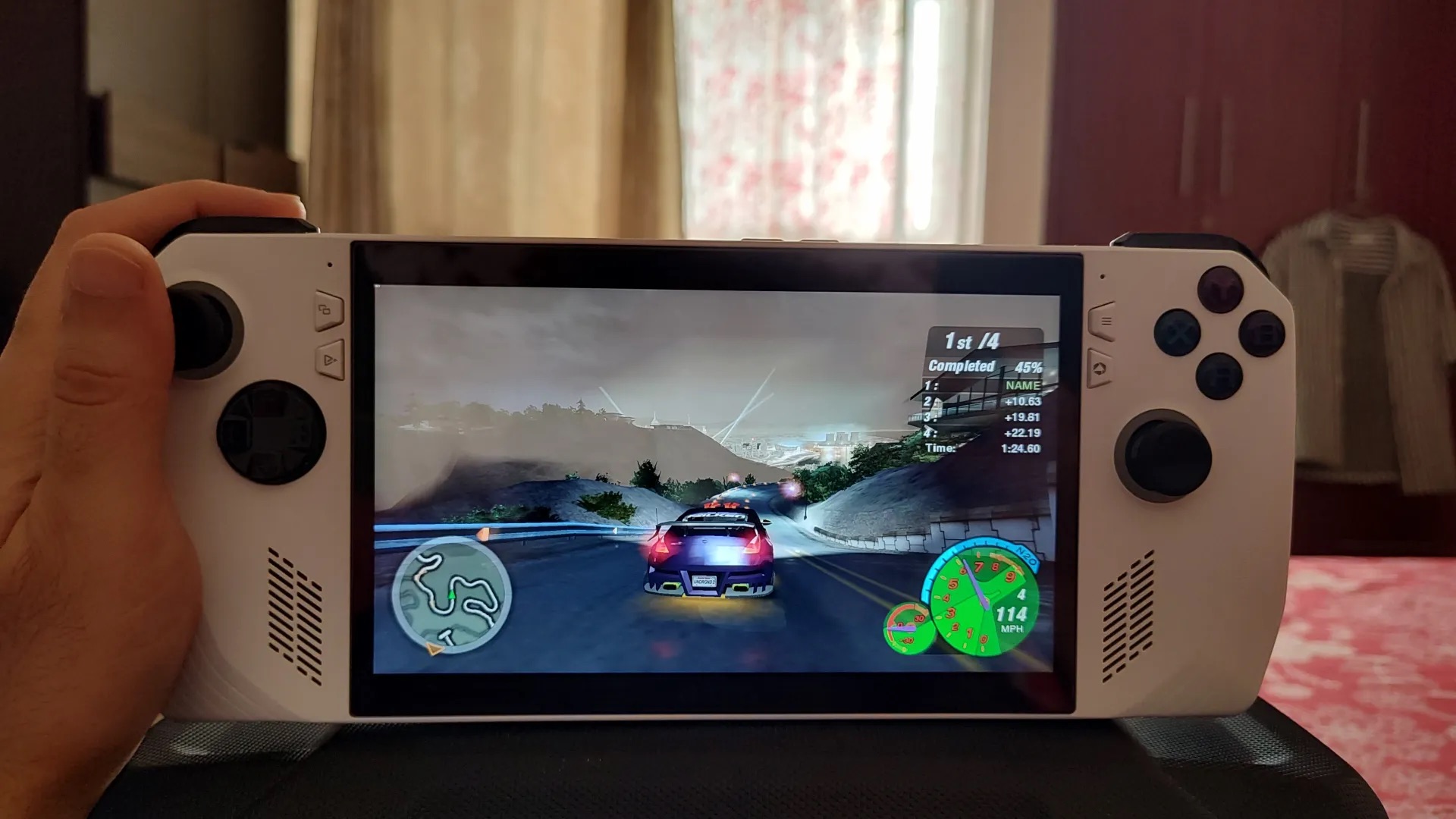
Me playing NFS Underground 2 on ROG Ally, a game that is delisted and abandoned by original publisher
I feel incredibly privileged to have been born into a time when video games existed, and to witness their maturity from Pong to pixel art to 3D graphics, and now seamless open worlds with incredibly detailed graphics and interconnected systems. Video games have always pushed hardware to its limits, whether in sound, storage, display, visual trickery, or even immersive narratives.
However, word on the street is that the gaming industry is dying. Never before have we seen layoffs at both successful and unsuccessful studios. Developers and contract workers are rewarded with layoffs, while executives flaunt their luxury car collections. Gamers are playing the same old games, and the top 10 have remained remarkably persistent, whether they are live-service games such as Fortnite, Roblox, and GTA Online, or remasters and remakes.
The fact that we have gone through almost three console generations without a new GTA says a lot about how expensive new games have become to make, and how reluctant mega-studios have grown after seeing the popularity of games-as-a-service. Estimates put GTA Online's average revenue at about $1.3 million a day; most new games fail to reach anything close to that. Cough Concord, cough Highguard, cough Redfall.
While this has been true for quite some time, a new challenger is on the block: an AI-induced hardware crisis. Suddenly everyone wants to build data centres, making everything with RAM or a CPU incredibly expensive. New gamers may stick with their existing devices, or buy fewer games after paying for an expensive console or PC wrapped around RAM and storage.
Analysts worry about sales of the PS6 or the next Xbox Series Z One X Two XTZ. Even Valve has struggled to offer the Steam Machine, a machine much less powerful than a PS5, at a lower price than the PS5.
If you were feeling concerned already, fear not: there is much more to be afraid of. Sony, one of the few bastions of physical games, has reliably shipped games on its discs, unlike Xbox, for which there is a community-crowdsourced site to check whether a disc actually contains a playable game. Yet Sony has announced that it will repurpose its Austrian factory to make microlenses for, you guessed it, data-centre equipment. It chose a fantastic time to announce this: after delisting more than 500 digital movies for UK users without refunds and amid reports that PlayStation physical discs could end in 2028.
Surely you think that's pretty much it. Well, no: Nvidia and AMD have recently announced price hikes, and even Apple, with its insanely good MacBook Neo, is going to raise prices and we might be even looking at financing options for its cheapest laptop soon too.
Let's talk a bit about Nvidia. It has single-handedly ensured that every game is DLSS-pilled with RTX technologies, and has normalised terrible GPU pricing with lopsided VRAM. While it profiteers massively from the AI boom with one hand, it offers a state-of-the-art streaming option with the other: GeForce NOW, at the measly price of ₹2,000 per month. I gave it a shot, and it is insanely good, so good that I am afraid we are headed towards digital-only, cloud-based gaming bundled into a subscription. Surely everyone will otherwise be priced out.
So what does this mean? Will you be able to afford your gaming hobby, or will you own nothing and be happy? To be fair, there is something to be said about the rise of indie games. They now frequently receive Game of the Year nominations (Clair Obscur Expedition 33, my personal favorite while not truly an indie, it is definitely not a Rockstar/Sony/Ubisoft-esque blockbuster game), and even win them, while often costing much less than the standard $70 AAA release. Some run beautifully on older hardware; heck, some are designed with web technologies and get mobile ports too. Vampire Survivors is a good example of that spirit.
It certainly feels like a big reset moment: a transitional phase driven primarily by enshittification and the AI boom. I am not very hopeful about the future, but when I look at my backlog, I feel grateful to the developers of the past who put their time and energy into making these games.
Maybe finally video games might only be made because the developers want to play them, not only to sell them, but going through this Crysis is the price we might pay to learn that lesson.